National Curriculum Level I (Covered in Evening Class)

$1,801.05
sold out

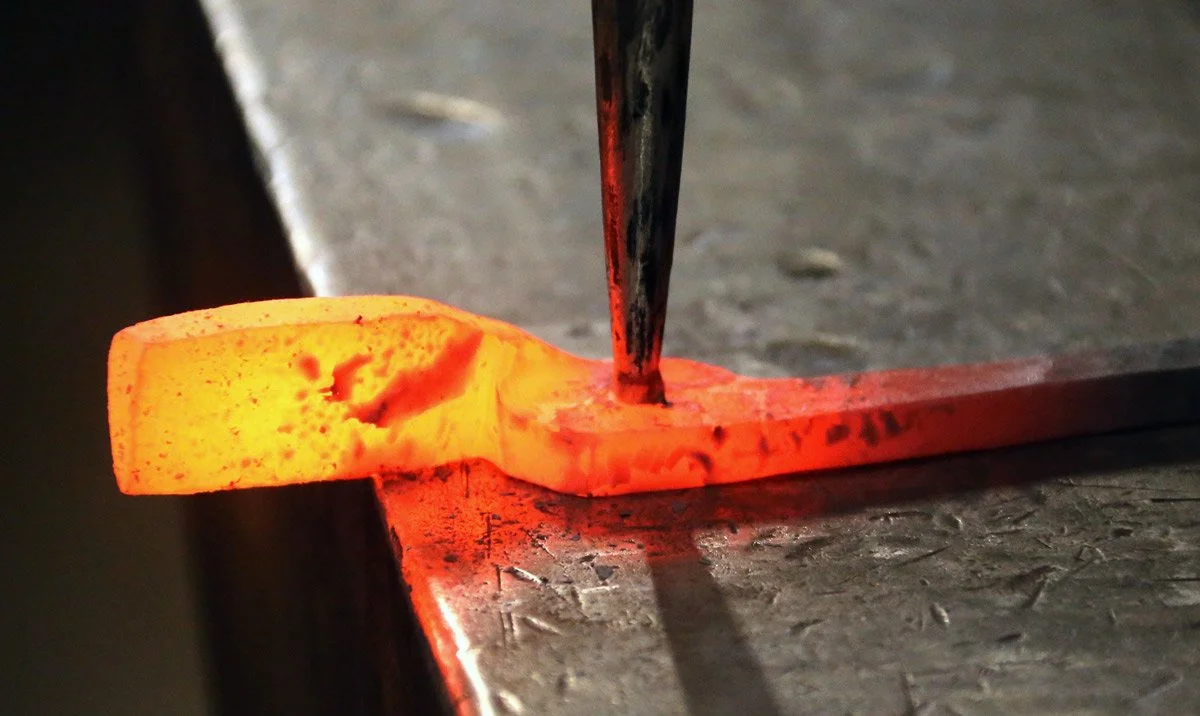
This course will introduce you to basic blacksmithing tools, their uses, essential safety practices, and the terminology of blacksmithing. It will cover the operations that comprise all forging: bending, cutting, drawing, punching, upsetting, and twisting. The class will emphasize not merely performing these operations effectively, but the completion of several small projects. Focus will be directed on fire management, as heat is the primary tool of the blacksmith.

While this covers the basics as Blacksmithing 100 – An Introduction does, the projects are slightly different, and are evaluated for passing or failing. Upon completion (which is not guaranteed within the 10 day class) a Level 1 Certificate is awarded.

Projects follow the Level 1 checklist:
1.1. Safety Understanding
1.2. Nomenclature of Anvil, Forge, Vise
1.3. Hammers and Blows (Half Face Blow Sample)
1.4. Tapers (square, octagon, round, chisel tip & diamond)
1.5. Forged Staples (Square & Chisel Tapers)
1.6. Forged S-Hook (1” ID both ends)
1.7. Forged Leaf (1/2” Stock Round or Square)
1.8. Hand-Held Round Punch (1/4”)
1.9. Hot-Cut Chisel
1.10. Hammer-Eye Drift (1/2 x 7/8”)
1.11. Slot Punch (1/8 x 7/8”)
1.12. Understand Heat Treatment (Treated Punch & Chisel)
1.13. Monkey Tool
1.14. Hand-Held Fuller and Bottom Fuller (Both 3/8”)
1.15. Round Tenon Samples (Round & Square Stock)
1.16. Round Drift and Drifted Sample – (For 1/2” Hole When Cold)
1.17. Forge Welded Flux Spoon
1.18. Forge Welded Chain (3-Links 3/8” Stock
1.19. Gate Latch Project According to Drawing


National Curriculum Blacksmithing Certification Level 2
Prerequisite: National Curriculum Blacksmithing Certification Level 1

Get notified by email when this product is in stock.

This course will introduce you to basic blacksmithing tools, their uses, essential safety practices, and the terminology of blacksmithing. It will cover the operations that comprise all forging: bending, cutting, drawing, punching, upsetting, and twisting. The class will emphasize not merely performing these operations effectively, but the completion of several small projects. Focus will be directed on fire management, as heat is the primary tool of the blacksmith.

While this covers the basics as Blacksmithing 100 – An Introduction does, the projects are slightly different, and are evaluated for passing or failing. Upon completion (which is not guaranteed within the 10 day class) a Level 1 Certificate is awarded.

Projects follow the Level 1 checklist:
1.1. Safety Understanding
1.2. Nomenclature of Anvil, Forge, Vise
1.3. Hammers and Blows (Half Face Blow Sample)
1.4. Tapers (square, octagon, round, chisel tip & diamond)
1.5. Forged Staples (Square & Chisel Tapers)
1.6. Forged S-Hook (1” ID both ends)
1.7. Forged Leaf (1/2” Stock Round or Square)
1.8. Hand-Held Round Punch (1/4”)
1.9. Hot-Cut Chisel
1.10. Hammer-Eye Drift (1/2 x 7/8”)
1.11. Slot Punch (1/8 x 7/8”)
1.12. Understand Heat Treatment (Treated Punch & Chisel)
1.13. Monkey Tool
1.14. Hand-Held Fuller and Bottom Fuller (Both 3/8”)
1.15. Round Tenon Samples (Round & Square Stock)
1.16. Round Drift and Drifted Sample – (For 1/2” Hole When Cold)
1.17. Forge Welded Flux Spoon
1.18. Forge Welded Chain (3-Links 3/8” Stock
1.19. Gate Latch Project According to Drawing


National Curriculum Blacksmithing Certification Level 2
Prerequisite: National Curriculum Blacksmithing Certification Level 1

A student has to complete the projects and show knowledge as outlined in the Level I description. A checklist will allow students and instructors to keep track of progress along the way. Level I will take the novice 6 months or more to achieve.

To be certified as an instructor for Level I, you must complete Level I and the projects of Level II except the final grille project. All ABANA Curriculum Instructors have to demonstrate proficiency in demonstrating at the respective level and sign both the ABANA Safety Policy and the ABANA Non-Discrimination Policy.